
Statement & Open Letter on January 22nd Metro Board Vote (C Line Extension to Torrance)
South Bay Forward Statement on January 22nd Metro Board Vote
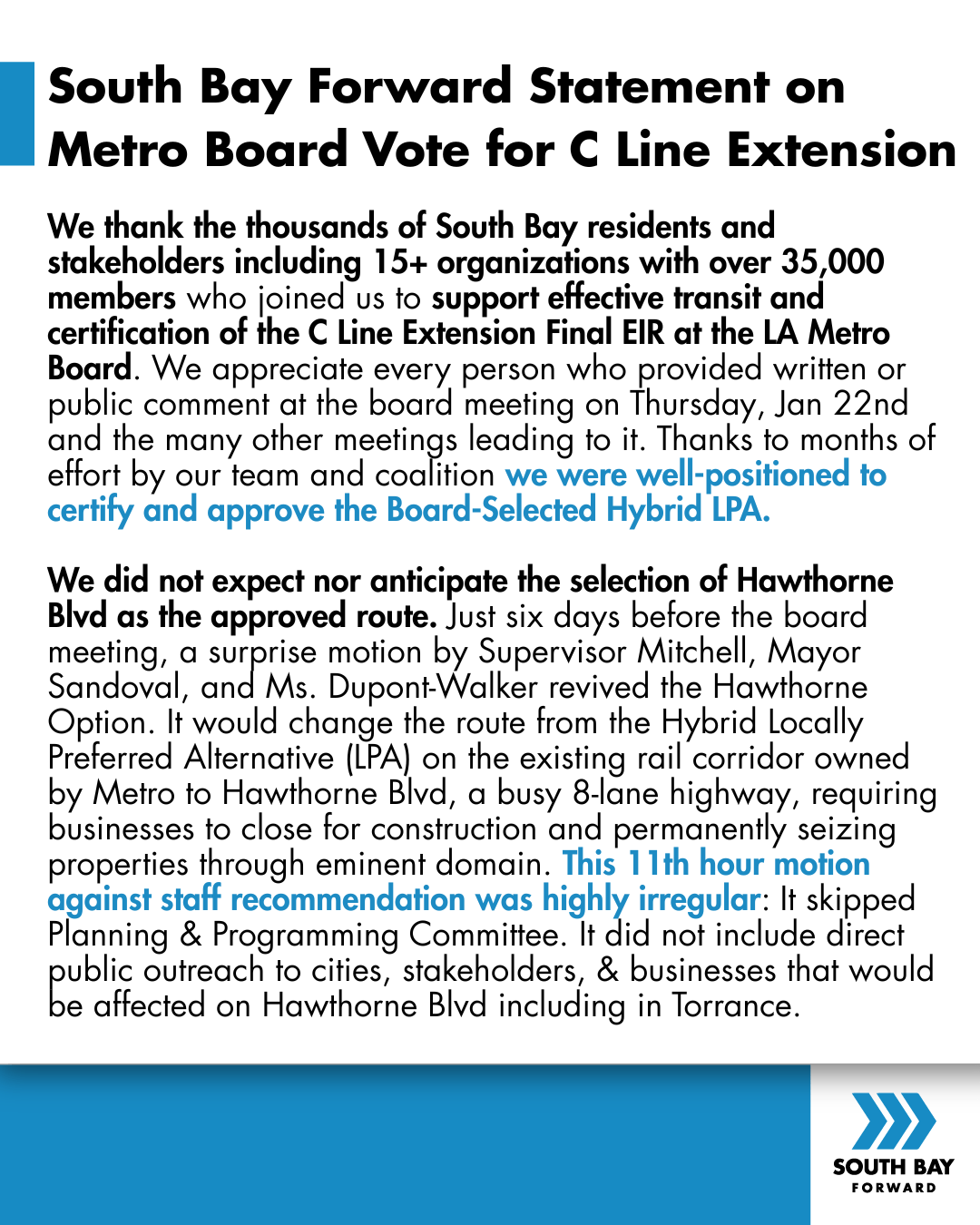
We thank the thousands of South Bay residents and stakeholders including the 15+ organizations with over 35,000 members who joined us to support effective transit and the certification of the C Line Extension's Final Environmental Impact Report (FEIR) at the LA Metro Board. We appreciate every person who provided written or public comment at the board meeting on Thursday, Jan 22nd and the many other meetings leading up to it. Thanks to months of effort by our team and coalition we were well-positioned when the project was put on the Metro Board agenda to certify and approve the Final EIR and move forward the Board-Selected Hybrid LPA.
We did not expect nor anticipate the selection of Hawthorne Blvd as the approved route. In 2024, the Board unanimously selected Hybrid ROW as the Locally-Preferred Alternative at DEIR certification. Just six days before the board meeting, a surprise motion by Supervisor Mitchell, Mayor Sandoval, Ms. Dupont-Walker (and later Mayor James Butts) revived the Hawthorne Option. It would change the route from the Hybrid Locally Preferred Alternative (LPA) on the existing rail corridor owned by Metro to Hawthorne Blvd, a busy 8-lane highway, requiring businesses to close for construction and permanently seizing properties through eminent domain.
This 11th hour motion was highly irregular: It skipped Planning and Programming Committee. It did not include public outreach to cities, stakeholders, and businesses that would be affected on Hawthorne Blvd. It overrode four decades of study, staff recommendation, and public investment in the rail corridor. It will add 5-10 years of environmental review and complex regulatory hurdles which could still jeopardize the extension as a whole. We did what we could to respond within the narrow time frame but were unable to get equal time with the Metro Board Members or affected communities. In the end, the Board approved the Hawthorne Blvd route.
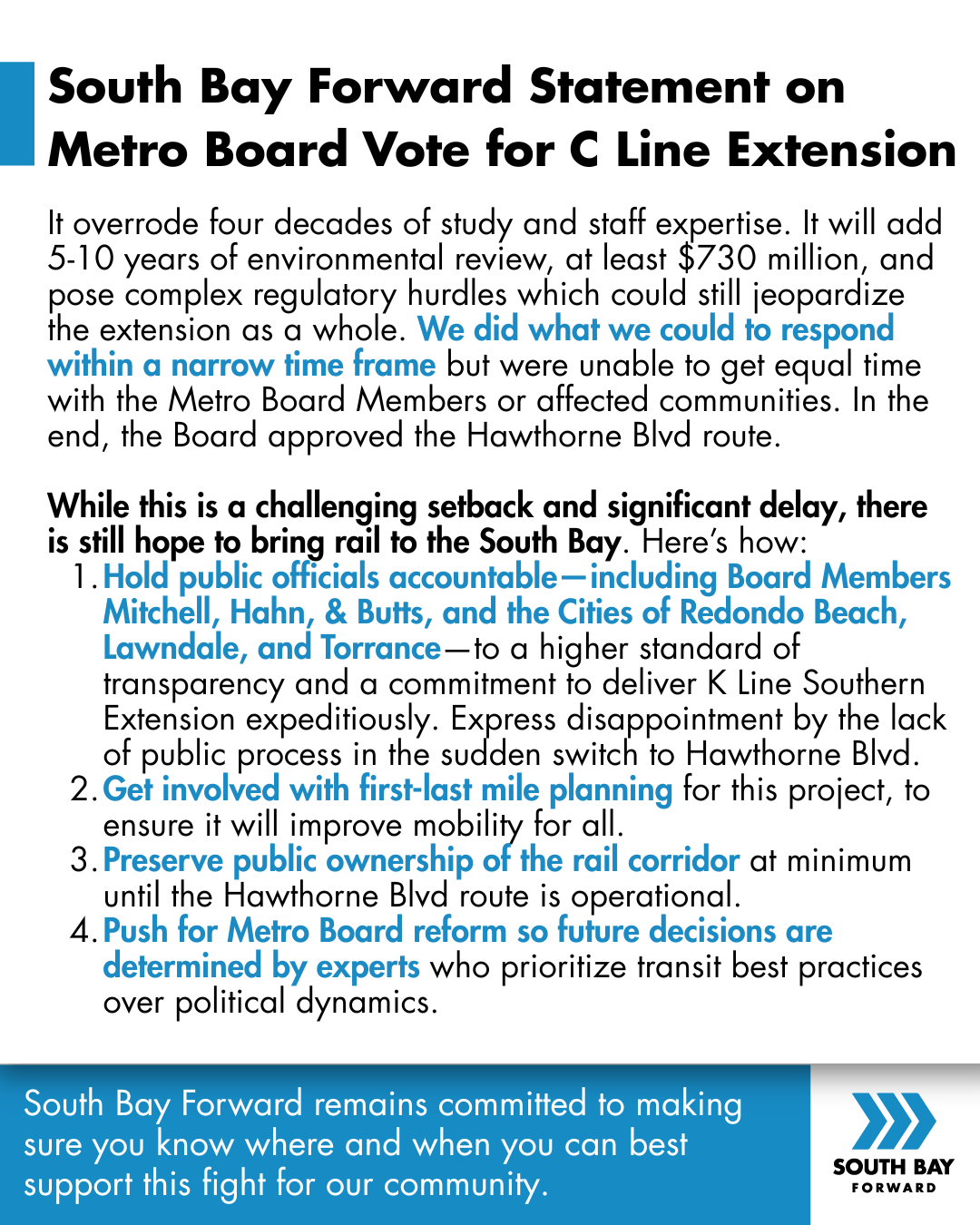
While this is a challenging setback and presents a significant delay, there is still hope to bring rail to the South Bay. Here’s how you can help:
Hold public officials accountable—including Metro Board Members, Supervisors Mitchell and Hahn, Mayor James Butts, and the Cities of Lawndale, Redondo Beach, and Torrance—to a higher standard of transparency and a commitment to deliver the K Line Southern Extension expeditiously. Express disappointment by the lack of public process and transparency with the sudden switch to Hawthorne. Do not forget the power of your vote at the ballot box.
Get involved in first-last mile planning for this project, to ensure it will improve mobility for all.
Preserve public ownership of the rail corridor at minimum until the project is operational.
Push for Metro Board reform so that future decisions are determined by experts in the field who prioritize transit best practices over political dynamics.
South Bay Forward remains committed to making sure you know where and when you can best support this fight for our community.
Open Letter to Our Community on Jan 22nd Metro Board Vote for C (Now K) Line Extension to Torrance
We thank the thousands of South Bay residents and stakeholders and the 15+ organizations representing over 35,000 members who joined us to support South Bay transit and the certification of the C Line Extension's Final Environmental Impact Report (FEIR) at the LA Metro Board. We appreciate every person who provided written or public comment at the board meeting on Thursday, Jan 22nd and the many other meetings leading up to it. Thanks to months of effort from our organizing team and partners we were well-positioned when the project was put on the Metro Board agenda to certify and approve the Board-Selected Hybrid LPA, which was selected by the Board in May 2024 and refined in the Final EIR.
With this Open Letter we aim to share our account from South Bay Forward, acknowledge irregularities, help our community process, and chart a path forward.
South Bay Forward speaks independently as an advocacy organization and does not speak for Metro or other coalition organizations in this letter.
The Metro Board passed over the ready-to-deliver Hybrid LPA and instead advanced the Hawthorne Option overriding Metro staff recommendation and adding complexity and risk that could delay rail to the South Bay by 5-10 years.
We did not expect nor anticipate the selection of Hawthorne as the approved route. The events surrounding the Board Meeting and the votes themselves raise questions around public process, transparency, governance, and major project decision-making.
The good news: The Final EIR will be certified and we have demonstrated overwhelming support and desire for rail to the South Bay. There is a path forward and we will hold our leaders accountable to transparency, better governance, and to delivering the K Line Southern Extension.
A Brief Timeline of Events
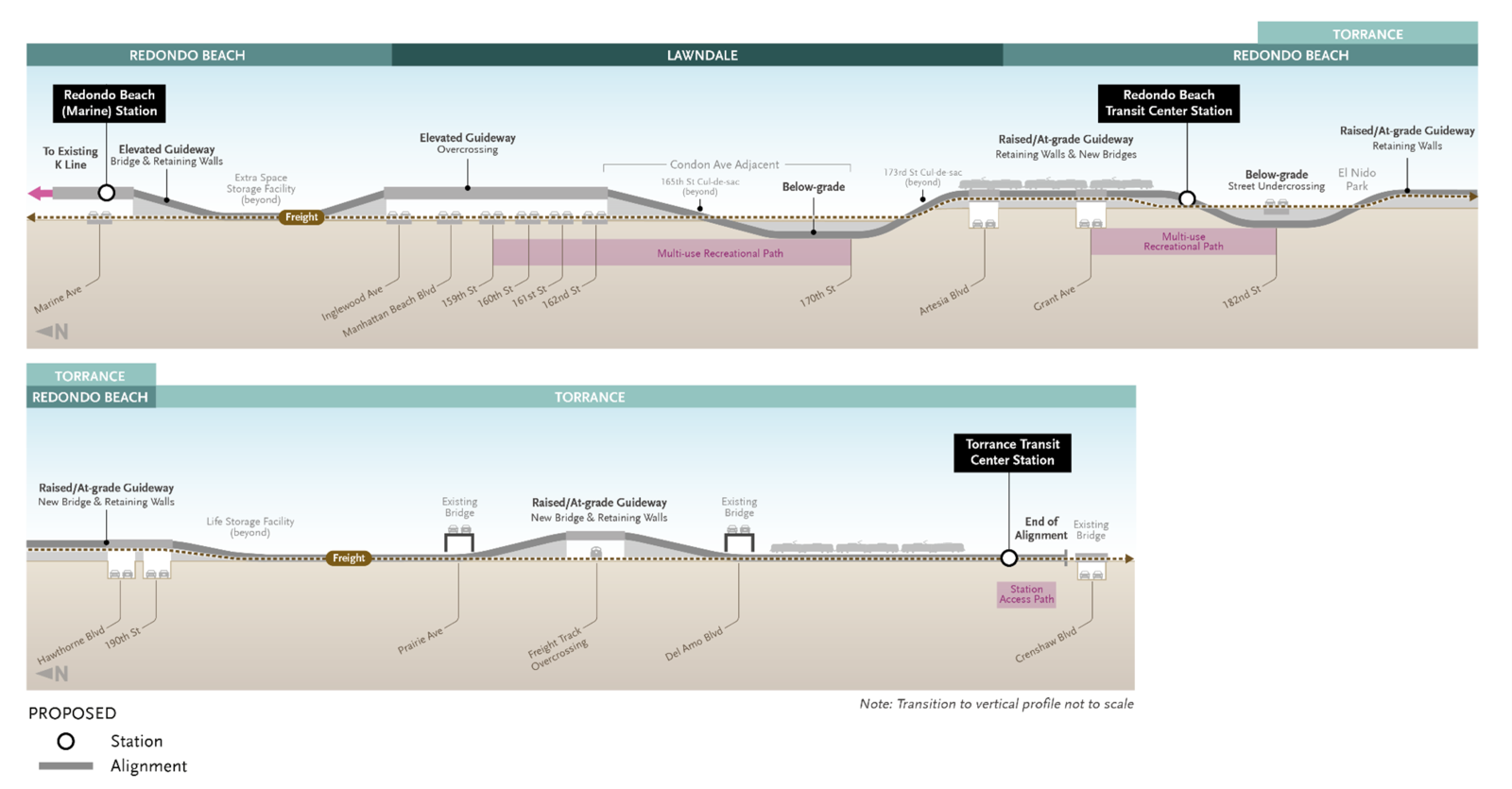
In May 2024, the Metro Board approved the Draft EIR and selected the Hybrid Alternative as the Locally Preferred Alternative for the C Line Extension to Torrance. It would utilize the existing rail right-of-way (ROW) Metro had purchased in 1993, the Harbor Subdivision, adjacent to an active freight line and would not displace any residents from homes. It would provide critical safety upgrades to the corridor in Lawndale and Redondo Beach neighborhoods with full grade separations for light rail, modern pedestrian crossings, new bridges and trackwork, sound walls, and mobility paths. The Final EIR refined design and cost estimates for the Hybrid LPA and provided extensive responses to questions and concerns raised in the Draft EIR. It included some analysis of the Hawthorne Blvd Alternative, which had been considered but not selected as the LPA in 2024.
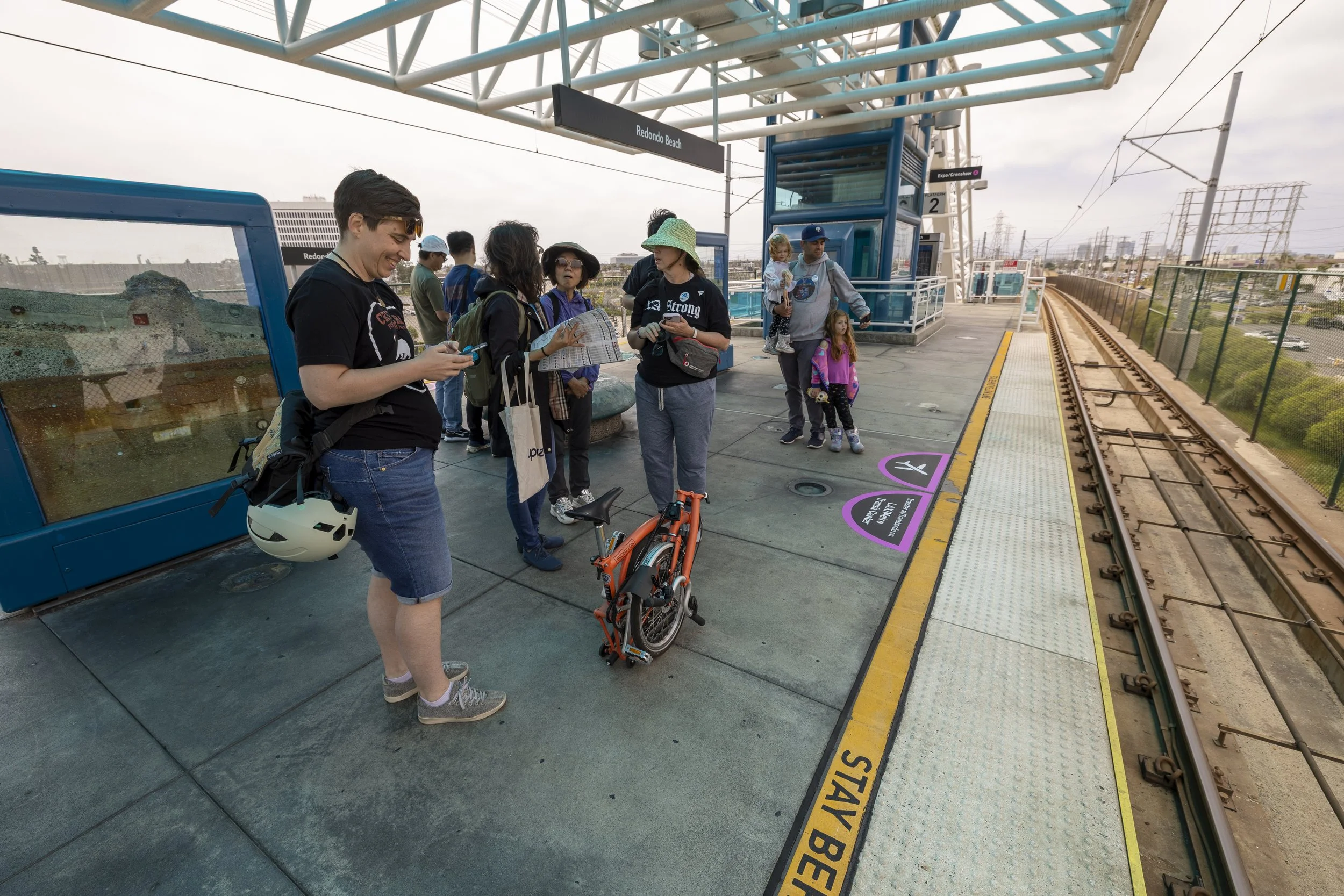
Before and after the release of the Final EIR in September 2025, South Bay Forward provided extensive volunteer outreach on the C Line to Torrance in the South Bay, hosting dozens of info booths and six community events in the South Bay reaching thousands of people. We invited local officials from Torrance, Redondo Beach, Lawndale, as well as Board Members and their representatives to our events, including the Bicycle Block Party in May next to the Redondo Beach K Line station and the South Bay Transit Summit in October at the Torrance Transit Center. We held these events open to the public as one of seven community-based organizations (CBO) promoting outreach on the project. Our work is volunteer-based and no member or volunteer receives direct payment for work we provide. See CBO statement (Instagram / Blog).
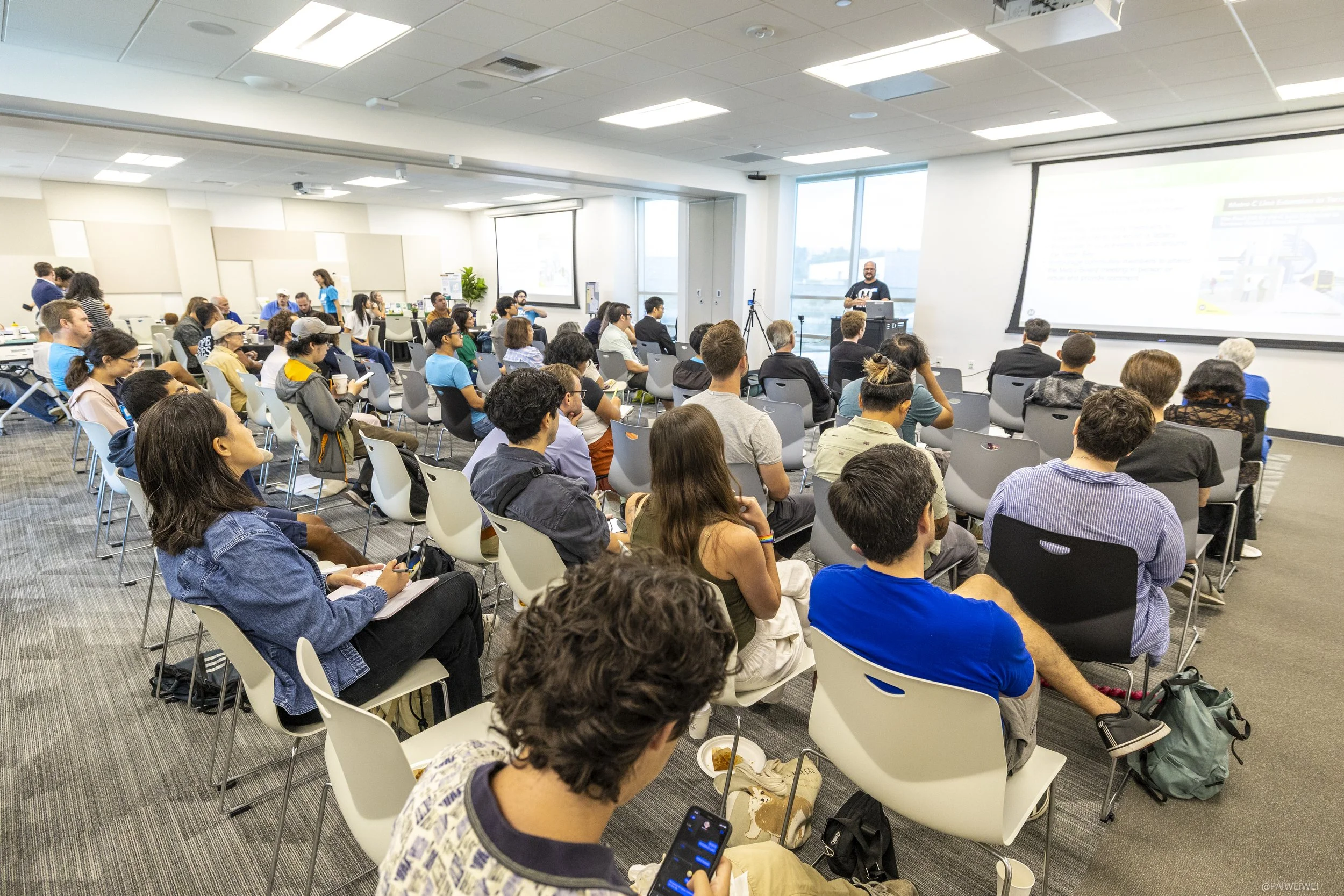
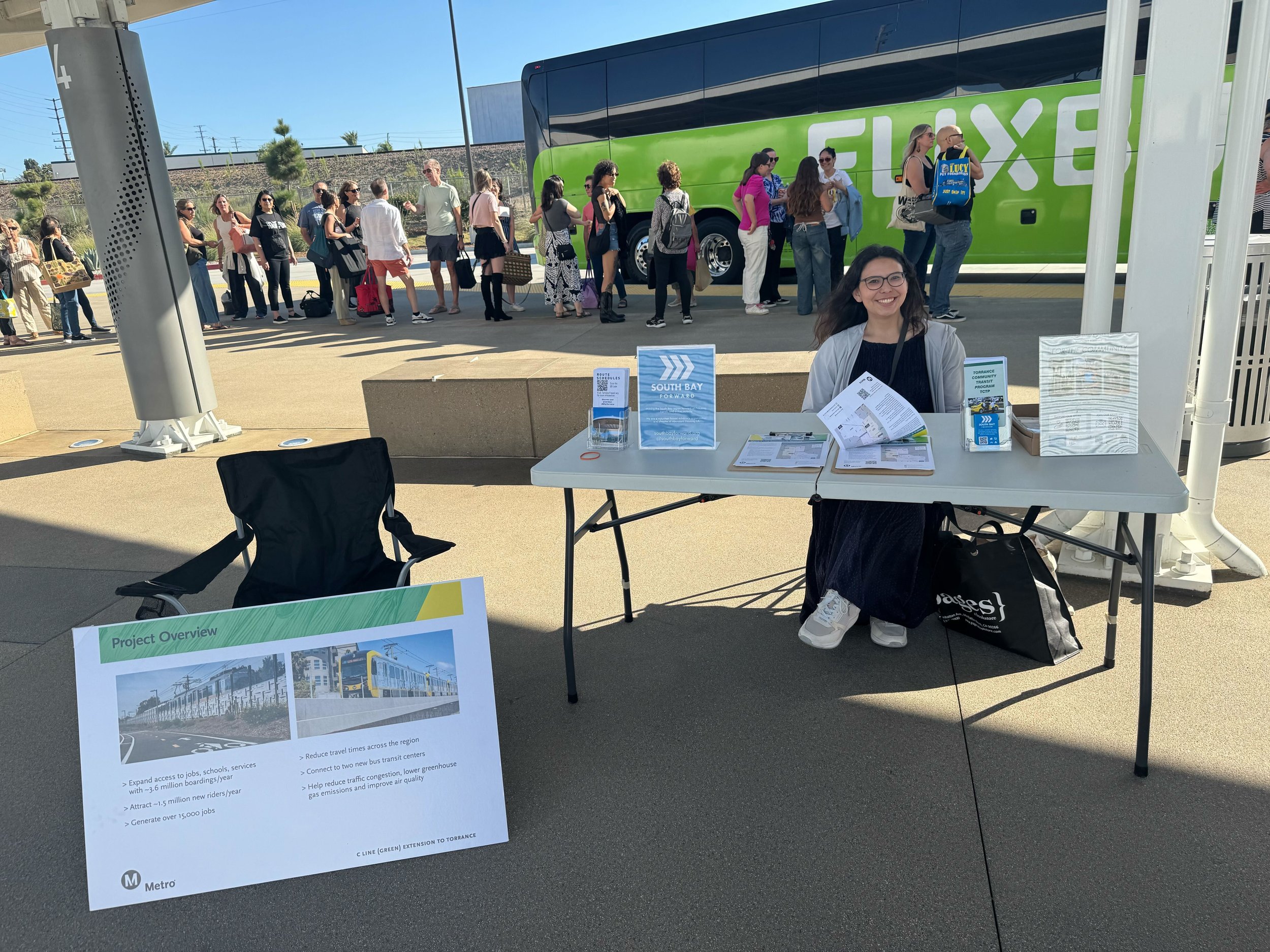
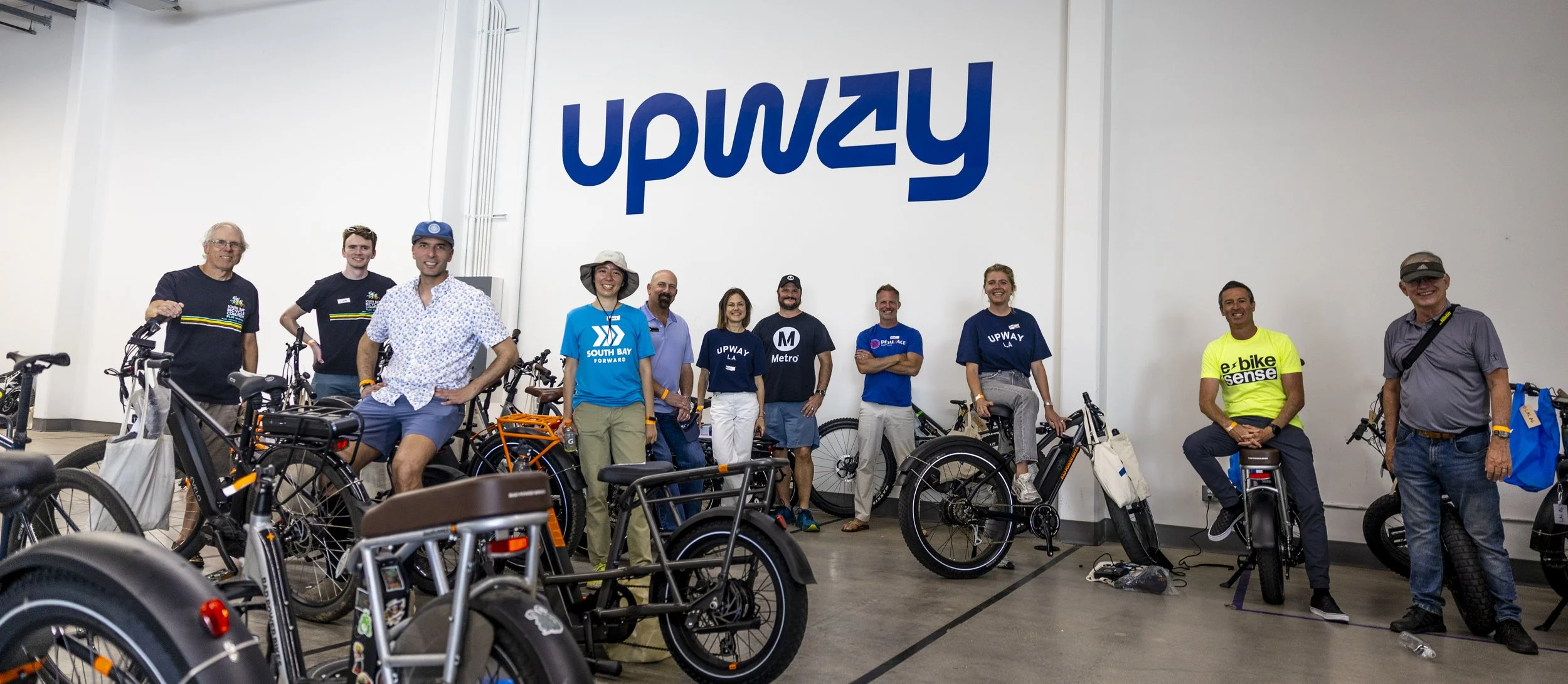
Since our organization’s inception in 2023, we had supported the C Line Extension project and utilizing the right-of-way. In addition to our transit advocacy, we also lead on housing and mobility advocacy throughout the South Bay. With the release of the Final EIR and the Board-Selected Hybrid LPA, our position remained the same. We focused on growing the South Bay On Board Coalition, with over 15 diverse nonprofit, business, community, and labor organizations in the South Bay and LA County in support of the C Line to Torrance, the Hybrid LPA, and FEIR certification and approval. Together we represented over 35,000 individuals which included MoveLA (10,000), Streets For All (5,000), Abundant Housing LA (5,000), Indivisible South Bay LA (6,500), Torrance Chamber of Commerce (6,000), Transit Coalition (1,000), League of Women Voters (1,000), South Bay Bicycle Coalition (1,500), South Bay Forward (900), Downtown Torrance Association (61), and Torrance Dems (120). See Support Letters.
At the Monday, December 8th South Bay Cities COG meeting (video / agenda) we spoke in force with over 50 Coalition members including the City of Torrance and South Bay stakeholders, labor unions, businesses, and advocacy organizations where we successfully stopped an attempt to pause the project and shared our strong support for Hybrid LPA. Our Coalition met with Supervisor Mitchell’s office on Monday, January 12th and, as in previous meetings, were told she supported rail to the South Bay but had not taken a position on project alignment and would not do so until the Board Meeting itself. We had also outreached and met with Supervisor Hahn’s office, who had supported the right-of-way since her time in Congress. Despite many attempts to reach out to Mayor Butts from 2023 onwards, he never responded to our requests.
At the Wednesday, January 14th Planning & Programming Committee, the staff recommendation for certification of the Hybrid LPA was presented, followed by discussion and public comment (video / agenda). Our South Bay On Board Coalition partners brought a strong presence with over 20 commenters in support of the staff recommendation from MoveLA, Torrance Chamber of Commerce, South Bay Forward, Downtown Torrance Association, Torrance Transit, and Transit Coalition. Mayor Butts read a prepared statement referencing Metro’s fiscal cliff and implying he was concerned about the project’s 50% funding gap in the same meeting where the Board approved a $20B project (Sepulveda Transit Corridor). Worryingly, he motioned to refer the item to the Full Board without a recommendation.
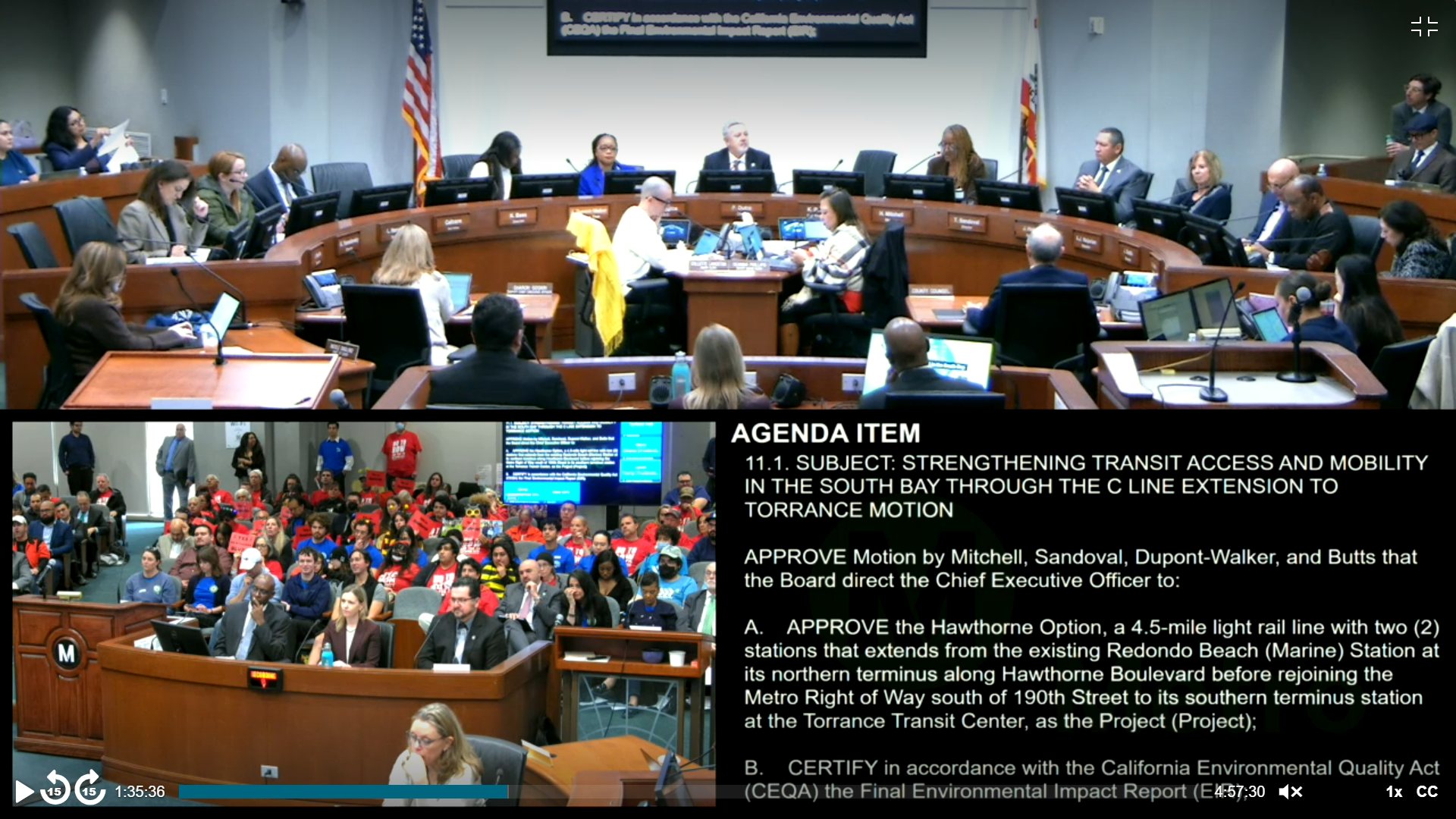
Then, two days later, on Friday, January 16th, a surprise motion by Supervisor Holly J. Mitchell, Mayor Tim Sandoval, and Jacqueline Dupont-Walker revived the Hawthorne Alternative. Our organization, local stakeholders, transit advocates, and by all appearances even Metro staff were blindsided by the sudden introduction of Motion 11.1. It was released on the Friday of a holiday weekend, two days after Planning Committee, and six days before the Board Meeting. We had been told just that week that the Supervisor had not taken a position and would not do so until the final meeting. We prepared for a fair process with facts and analysis from the Final EIR, staff presentation, and public comment to factor into the Board vote. But we were purposefully misled: A plan to oppose the Hybrid ROW LPA and force the alternate alignment was in place for some time.
Motion 11.1 and Its Implications
Motion 11.1 bypassed the Planning Committee and sought to override Metro’s staff recommendation. In doing so, it would override four decades of study, professional expertise, local support, and investment in the right-of-way. It appeared to be coordinated with the City of Redondo Beach, as the City released an agenda item on the same day the motion dropped with a support letter on the Hawthorne motion (Item P.1). Importantly, we learned there was zero outreach or coordination done on the motion with stakeholders in the City of Torrance or the Chamber of Commerce which had consistently and strongly supported ROW and Hybrid LPA and opposed the Hawthorne Blvd Alternative. See City of Torrance’s statements here and here. While Redondo Beach officials spent time cultivating political capital with Supervisor Mitchell’s office, Torrance officials had not cultivated the same with Supervisor Hahn’s. The two cities of Redondo Beach and Torrance maintained opposite positions on this and other projects.
Motion 11.1 sought to change the project alignment entirely at the eleventh hour of FEIR Certification, from the staff recommendation of the Hybrid LPA to the Hawthorne Blvd Alternative. Supervisor Mitchell herself was an architect of the Hybrid LPA that included critical feedback from stakeholders. She had spoken of its benefits at the May 2024 Board Meeting and had conducted community walks and workshops with Metro staff and residents to evaluate route options.
Final EIR approval for Hybrid LPA would have advanced design and construction immediately and at $730 million lower in cost than the Hawthorne Alternative. At $2.7 billion and with $1.4 billion secured, it would be 52% funded, far more than most projects at FEIR certification.
It would build light rail in the Harbor Subdivision Metro-owned right-of-way (ROW) adjacent to an infrequent freight line and would not displace any residents from homes.
Permits and approvals would be streamlined as Metro already owns the ROW, and this would help contain costs and uncertainty in construction.
It would bundle necessary safety upgrades, modern pedestrian crossings, new bridges and trackwork, sound walls, and mobility paths that would not be built with the Hawthorne Alternative.
The neighborhood station at Redondo Beach Transit Center would provide ADA access, bike lanes, restrooms, parking, and direct bus connections. It would link to existing and planned bike lanes in the city.
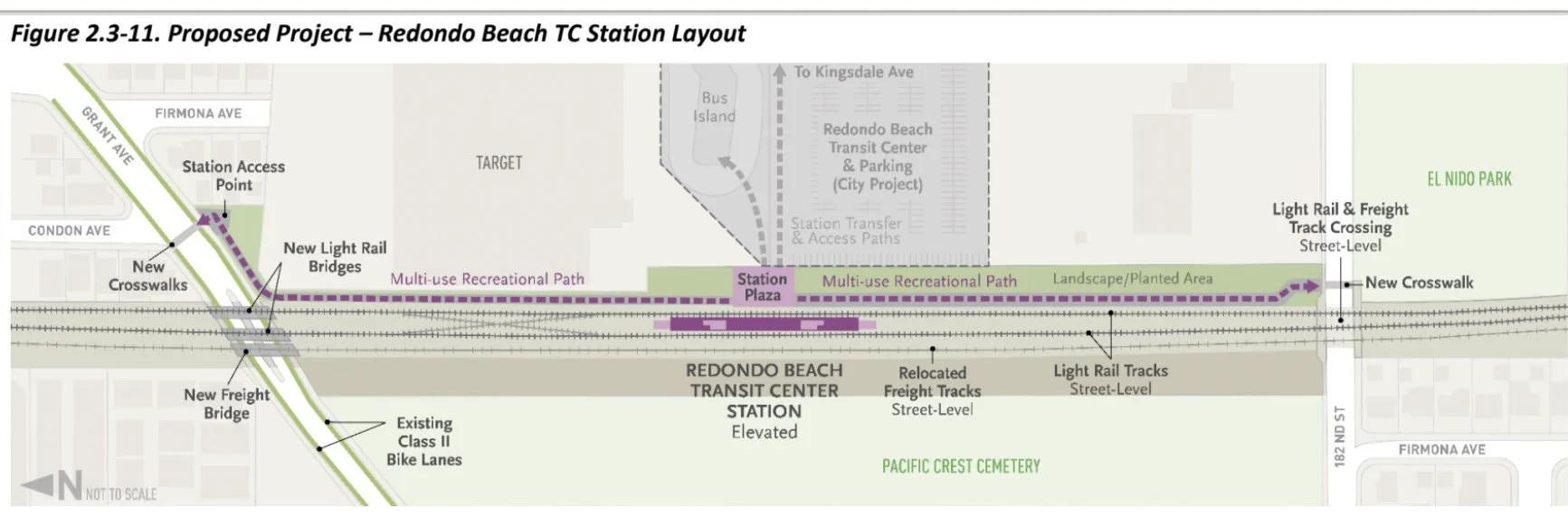
Neighborhood-compatible station connected with mobility paths.
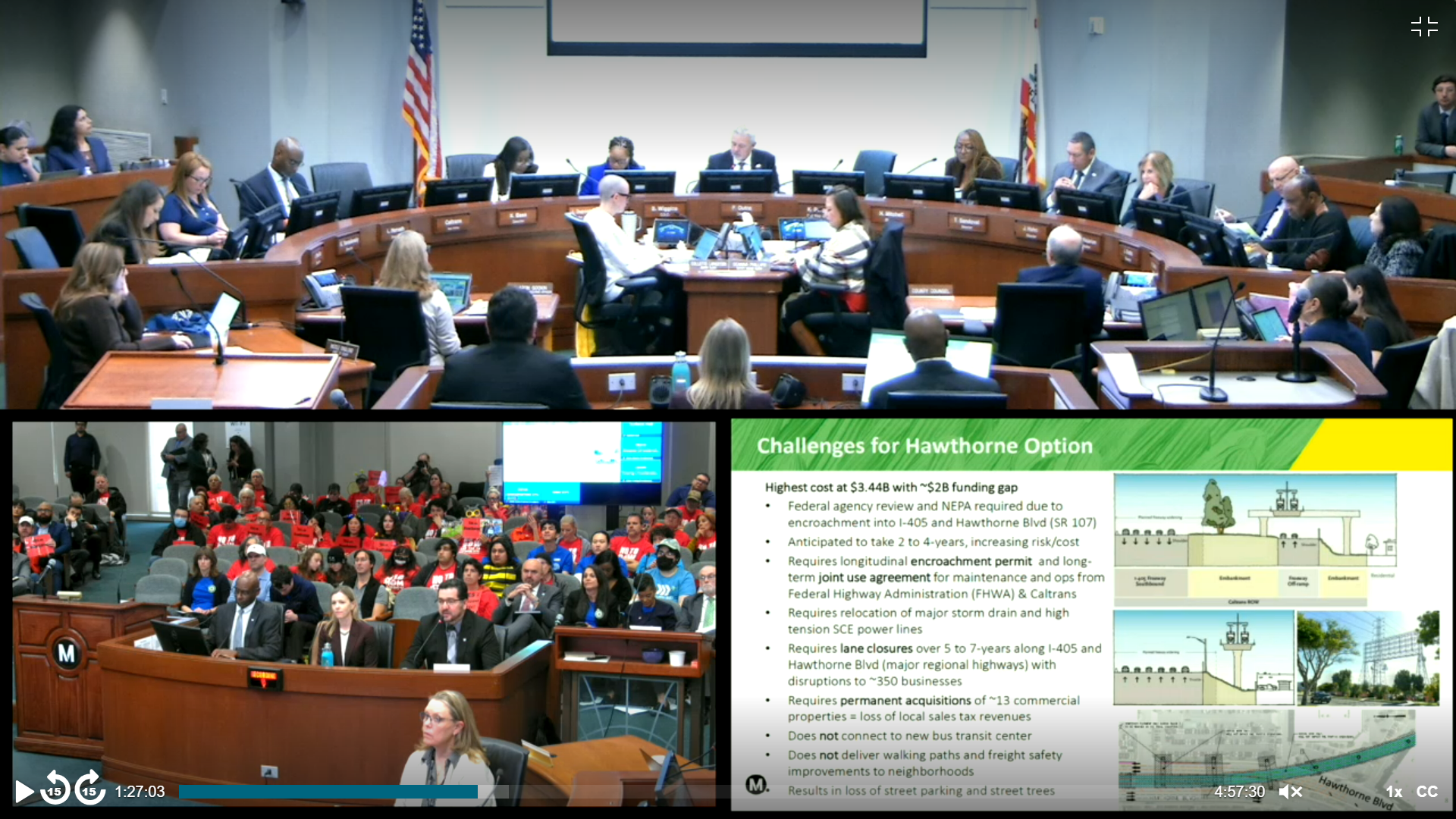
Challenges with the Hawthorne Alternative include:
Permanent acquisition of 13 commercial properties.
5-7 years of lane closures on Hawthorne Blvd during construction which sees 70,000 vehicles per day.
Relocation of a massive 6 ft diameter regional storm drain that is 20 ft underground.
Disrupting dozens of utility connections.
Encroaching on Caltrans property abutting the I-405 eliminating potential freeway improvements.
Raising high-voltage SCE transmission lines crossing Hawthorne Blvd.
Estimated economic impacts from loss of business and tax revenue in the $hundreds of millions during construction for Lawndale, Redondo Beach, and Torrance.
$730 million more in cost, with an uncertain path to funding in today’s economy and national outlook.
Any one of these challenges could delay the project at minimum 2 years for a total of likely 5 to 10 years, requiring approval and coordination with the Federal Highway Administration, NEPA, SCE, Caltrans, LA County, and Cities. They pose enormous regulatory hurdles, ballooning out costs and timelines.
The Final EIR and expert analysis extensively detailed and supported Hybrid LPA, not the Hawthorne Alternative. Hybrid LPA would be ready to start construction after FEIR Certification with completion by 2036. The staff presentation showed Hawthorne could take 4 or more years for approval and construction.
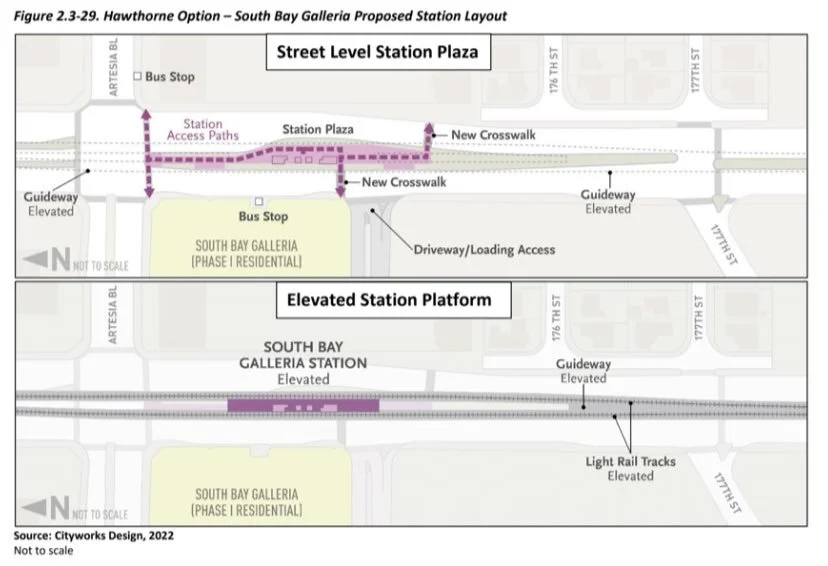
Elevated station with street-level crosswalks in 8-lane highway & high injury corridor
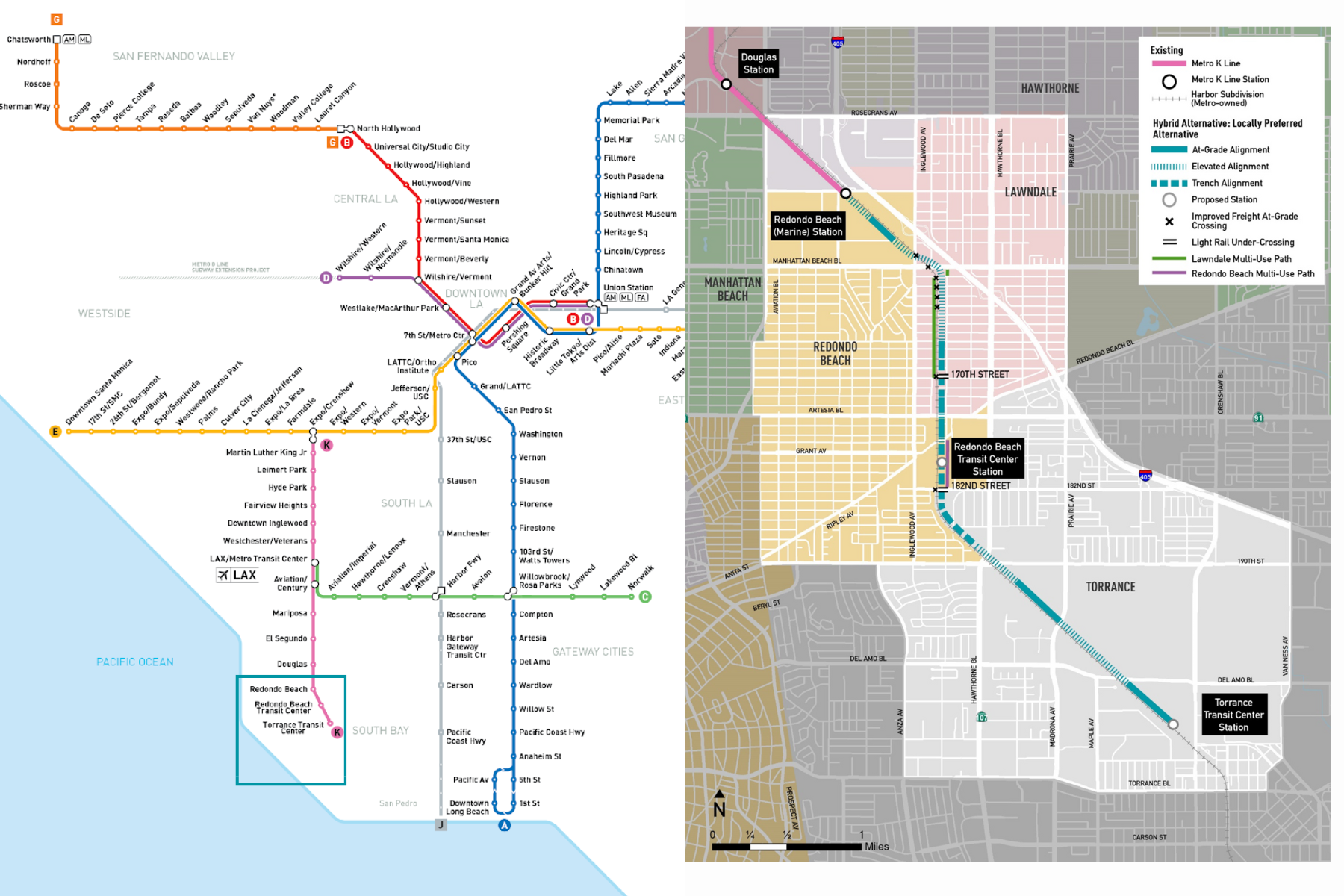
Proposed Project and LA Metro Map
The Dynamics of the Board Vote
We did what we could to respond to the sudden motion in a very narrow time frame of six days: What we expected to be a routine Board vote—similar to the May 2024 Draft EIR meeting—became very different. The staff recommendation (Item 11) for Hybrid LPA and the Motion for Hawthorne (Item 11.1) were competing items. Initially planning for a simple FEIR certification vs No vote, we now had to to relitigate the case for Hybrid ROW vs Hawthorne with very little notice. Harnessing the power of our coalition and grassroots organizing, residents sent in thousands of emails supporting Hybrid LPA. Hundreds of South Bay residents, business owners, transit riders, and advocates showed up to speak for Hybrid LPA at the Board Meeting. We stood for effective transit and 1.5 million future riders. We called for no more delays and to advance the Hybrid LPA and staff recommendation to bring light rail within our lifetimes. Advocates arrived via Torrance Transit buses and via Metro bus and rail. We contacted Board Member offices by phone and with Coalition organizations.
With only a few days to prepare, we showed up for effective transit and evidence-based planning. But we didn’t realize we were up against a political alliance of a County Supervisor, City of Redondo Beach, and residents in Lawndale and Redondo who had opposed ROW alignments for years. By all appearances, these three groups worked together on the switch to Hawthorne.
Concerns raised by neighbors opposed to building on the ROW had changed over time from safety, crime, construction, pipelines, frequency, and noise, to broader claims on historic resources, green space, “toxic” soils, and proximity to homes, utilities, and freight rail. Their neighborhood groups used names like “Right of Say” and “South Bay Environmental Justice Alliance” and they messaged with fear and misinformation using short-form videos, paid advertisements, flyers, and artificial intelligence. Their concerns represented a misunderstanding of light rail and project benefits and were thoroughly addressed in the Final EIR. Most were residents and homeowners in Lawndale and Redondo Beach immediately next to the rail corridor.
They spoke at Metro meetings when the item was not on the agenda and lobbied Board Members for 18 months since the Draft EIR vote. Despite saying they supported transit, they painted Metro as an enemy agency, claiming the project would “railroad” or “divide” their community. Despite many design upgrades and meaningful mitigations built into the Hybrid LPA, they would not accept a project on the ROW and called for No Build, Bus Alternative, or Hawthorne Blvd instead. They wore red shirts at Board Meetings and blocked our efforts to outreach to them in-person and on social media. Now that the Hawthorne motion passed, we ask them to use their influence to continue to advance the project.
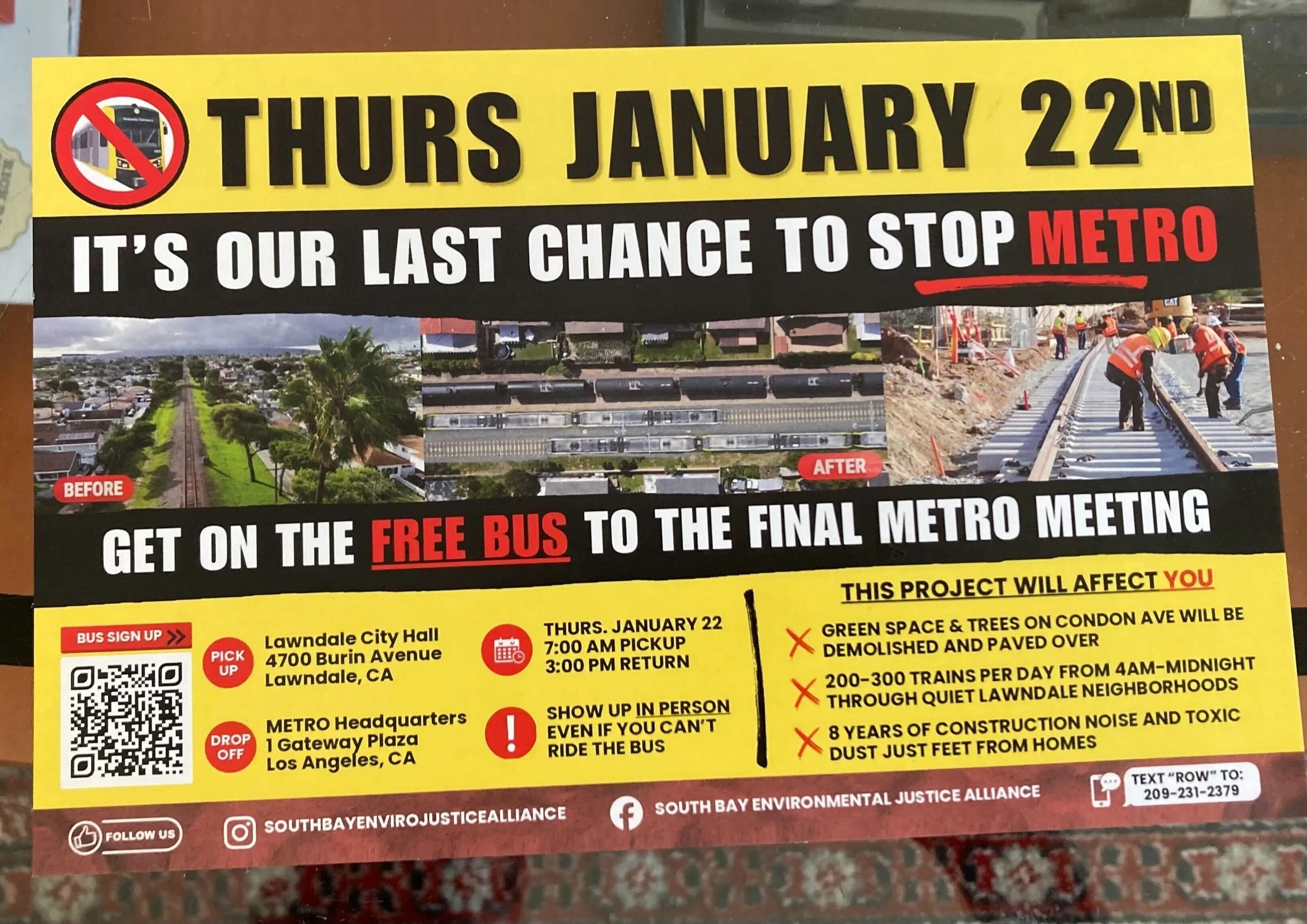
The City of Redondo Beach historically had supported the right-of-way and had even located its Transit Center next to the rail corridor in anticipation of future rail service. In previous position letters they requested trenching, which Metro had responded to by producing the Trench Options and Hybrid LPA with grade separations at 170th and 182nd. However, politics had changed within the council, and since 2023 they focused on “standing with our neighbors” and “protecting quality of life” for homeowners near the rail corridor. The city did not conduct public polling to assess for public support on route options, but dug their heels in on Hawthorne. They hired a legal team to prepare a challenge to the Final EIR and kept discussions to closed session. City council members lobbied the City of Hermosa Beach to take a position for Hawthorne. In our neighborhood outreach we found most Redondo Beach residents, including in North Redondo, supported ROW or had no position, and the city’s official views did not reflect theirs. The most common question from our outreach was: “How soon will it be built?”
The Final EIR comprehensively evaluated and addressed all concerns, drawing on decades of technical analysis and precedent that would be airtight to legal challenges. Similar conditions—light rail with shared freight corridors, utilities, walking paths, and near to homes—exist across the Metro system, including the E Line in Culver City, the A Line in South Los Angeles and South Pasadena, and most recently, the A Line Extension to Pomona. No homes would be acquired and the right-of-way was wide enough for light rail, freight rail, trees, and walking paths. Community benefits, in addition to the many rail safety upgrades and amenities for Hybrid LPA, could be negotiated for property owners such as double-paned windows, compensation for remodeling, tree giveaways, and parks funding. In our outreach and communication with neighbors and elected officials, however, there was no interest in pursuing community benefits.
As we expect transparency and sound governance from elected officials, we are disappointed in the lack of public process around the Motion, and how we were misled by Supervisor Mitchell’s office. This includes the lack of outreach to stakeholders in Torrance and impacted groups on Hawthorne Blvd, the undercutting of Metro staff and the consistent support from transit advocates, and the sudden introduction of a motion for Hawthorne after being told that the Supervisor had not taken a position and the vote would come to the final meeting. The motion completely blindsided advocates and staff, with little time to respond, conduct outreach, or engage those impacted. In just a few short days the office worked to secure votes from Board Members. Donors were sent talking points. Trades were called off our coalition. Direct emails were sent by the neighborhood group. The speed and coordination of so many stakeholders and the Metro Board to support a motion introduced less than a week before the vote is not a coincidence.
Supervisor Mitchell expresses she is committed to this project and to making it a reality. She believes the Hawthorne Option to be a viable and superior project. The project has commitments for funding from state representatives but significant timeline and regulatory uncertainties remain. More time and funds are needed to advance design, more studies are required for NEPA due to Caltrans and FHWA involvement with the I-405 encroachment, approvals could hang in limbo, lawsuits or appeals can arise, and other opposition can organize. Heavy-handing a vote to override years of professional analysis and Metro’s own experts does not communicate transparency nor inspire confidence. It weakens public trust in the process of planning major capital projects. It signals disregard for Metro staff, planning professionals, engineers, and years of technical work and public engagement. It undercuts public investment and taxpayer resources. It calls into question a governance structure on the Metro Board composed of members more aligned with re-election and political dynamics than evidence-based planning. We recognize we need transit champions in the South Bay. Supervisor Mitchell may want to fill this role and we know the importance of partnership. But after these events, our trust is broken and will take time to repair.
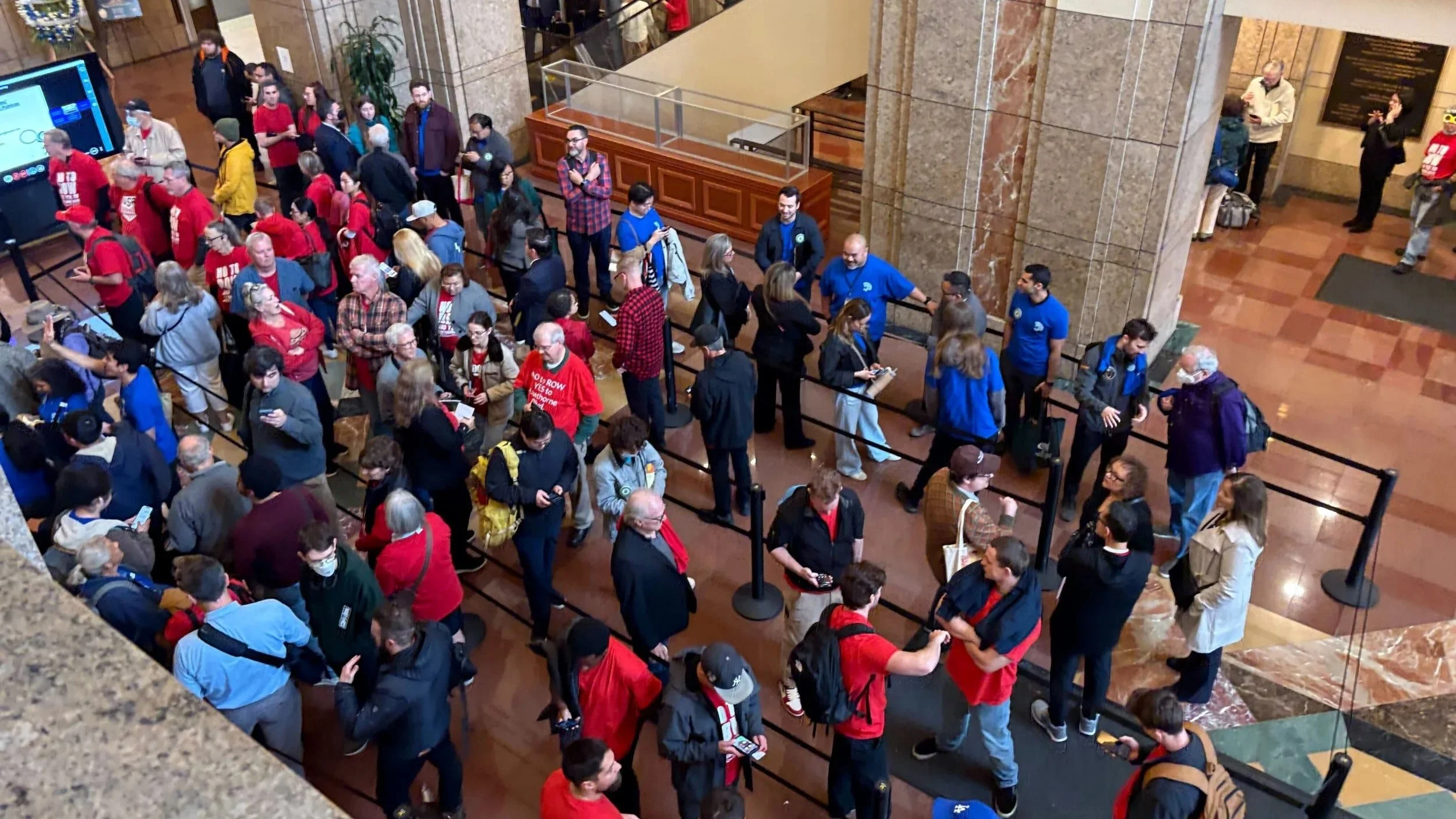
Blue: “South Bay On Board” Bring Rail NOW / Red: “Right of Say”
Heading to the Board vote on January 22nd, we felt it was important to show up and give it our all (video / agenda). Half of the room wearing red from Right of Say, the other half in blue from South Bay On Board. More than one hundred South Bay residents—parents, students, teachers, scientists, engineers, homeowners, business owners, transit riders and more—across our community spoke for the Hybrid LPA and dozens more were cut off from speaking due to time. Speakers shared lived experiences of disability, access, traffic violence, safety, transit dependence, and youth mobility. We brought out residents from the grassroots not only from Redondo, Lawndale, and Torrance but also Gardena, Lomita, Hawthorne, Inglewood, Beach Cities and throughout LA County. We wore blue shirts in a sea of red and rode public buses and public transit to the meeting.
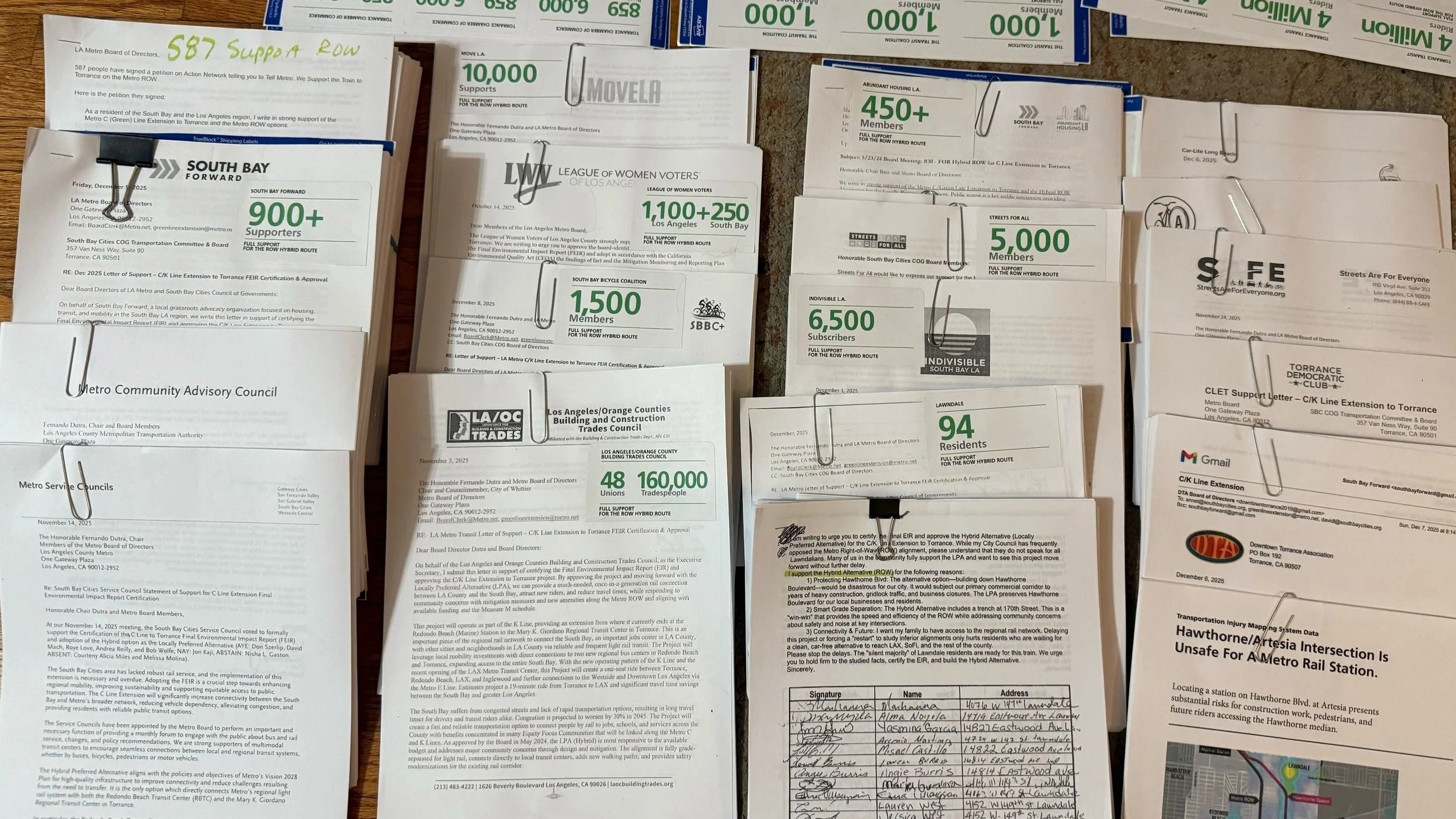
Representatives from coalition orgs submitted letters in letterhead for Hybrid LPA with the number of people they represented. Torrance brought their city council, city manager, transit staff, economic director, and public works director. For the Hawthorne Option there were only two neighborhood groups. For Hybrid LPA there were 15+ grassroots community organizations with speakers urging the Board to stay the course by certifying the staff recommendation to bring rail now.
Representatives submitted letters from MoveLA (10,000), Streets For All (5,000), Abundant Housing LA (5,000), Indivisible South Bay LA (6,500), Torrance Chamber of Commerce (6,000), Transit Coalition (1,000), League of Women Voters (1,000), South Bay Bicycle Coalition (1,500), South Bay Forward (900), Downtown Torrance Association (61), Torrance Dems (120), Metro South Bay Service Council and more. Staff from Senator Ben Allen and Assemblymember Muratsuchi were present to deliver their support for the LPA / ROW. Our Coalition submitted petitions from 587 residents, 22 businesses on Hawthorne, and over 60 residents in Lawndale supporting Hybrid ROW LPA. We are proud that we came together to show up for our communities and to fight for effective transit to the South Bay. We built a movement and rallied everyday people and residents in our communities without traditional political capital.
In the end, the vote was pre-determined and public comment made no difference. We witnessed not a fair weighting of facts and findings but an orchestrated theater. Many have raised concerns about Brown Act violations given comments from multiple Board Members indicating they knew where the vote was headed or that their opinion had changed in the past two weeks. Praise was given to “Right of Say” speakers for Hawthorne as “residents,” while “South Bay On Board” speakers for Hybrid LPA were labeled “activists.” These comments ignored the hundreds of people who showed up to stand for the staff recommendation and Hybrid LPA who are South Bay constituents, voters, and stakeholders who took time off work and school on a Thursday to be heard.
Chair Dutra and Supervisor Hahn raised important questions on Hawthorne’s indefinite project timelines, Caltrans encroachment permits, and Metro’s public ownership of the rail corridor. Despite comments, the Board vote for the Hawthorne Option was unanimous, with Mayor Bass returning to the room just before the vote and Supervisor Hahn apologizing to Torrance before casting her vote. The Metro Board sided with a small sector of Lawndale over the Greater South Bay, motivated property-owners over Metro staff, anti-Metro groups over pro-transit groups, and a few hundred people over the thousands in our larger coalition across the South Bay.
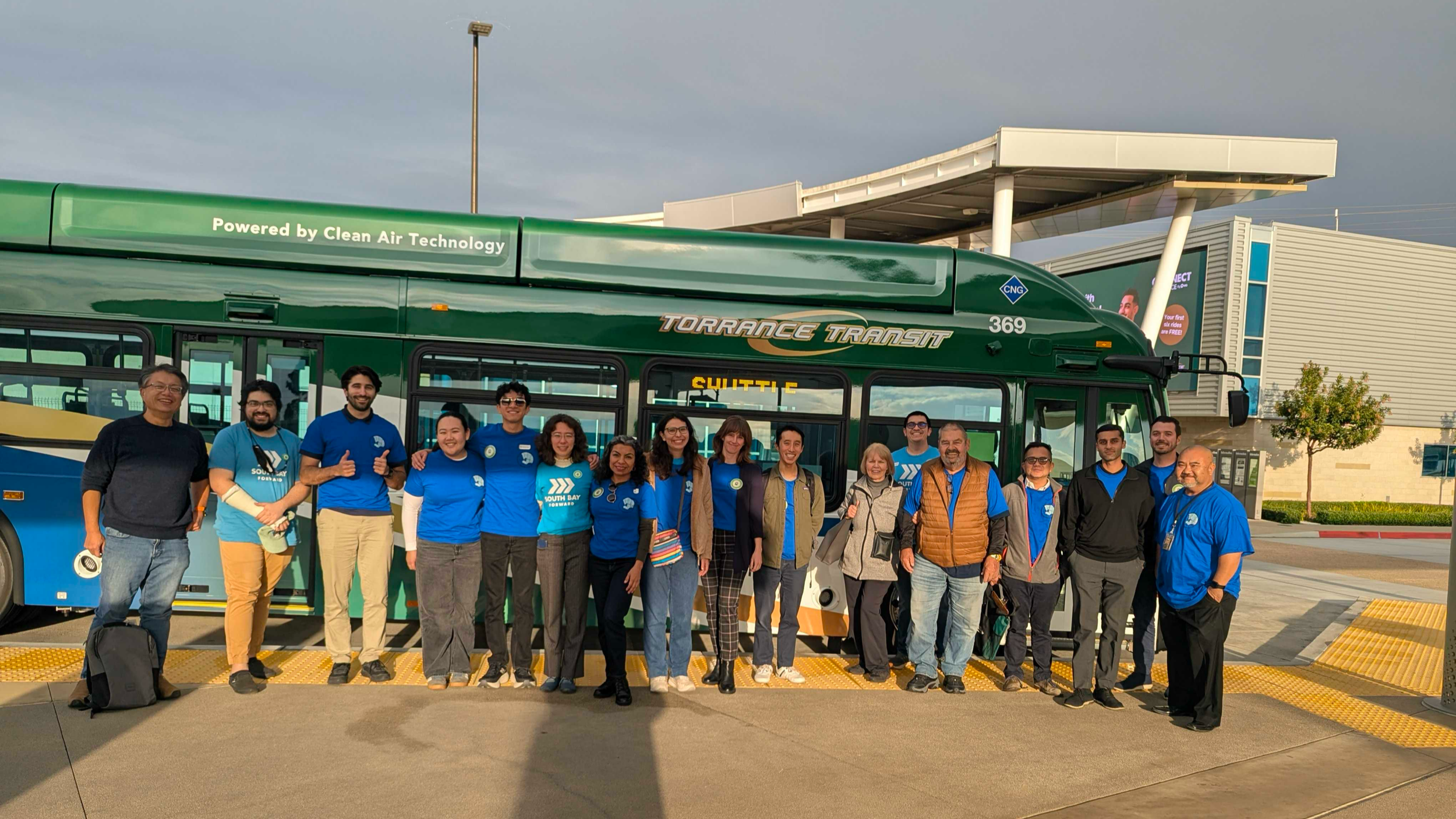
South Bay residents in support of Hybrid LPA, one of three buses from Torrance Transit
Moving Forward: Where Do We Go From Here?
Though the vote took a completely different turn, it’s important to acknowledge that we have a project and we will continue to champion South Bay transit. Without our hard work and movement-building to call for rail to the South Bay, there was a chance the project could have been No Build and the FEIR not certified. Mayor Butts seemed headed in this direction. Supervisors Hahn and Mitchell know we need rail to the South Bay. This vote advances FEIR certification, so it’s important that moving forward all stakeholders have a seat at the table to chart a path forward. We intend to remain in the conversation.
We will always stand by the merits of the Hybrid LPA and ROW. Hawthorne is not the project we fought for but if it proves deliverable and moves forward, we call for greater mobility, safety, and accessibility benefits. This project will take much longer and cost far more, and can still risk cancellation, so what happens next matters.
First, we will hold our public officials accountable to a higher standard of transparency and to their promise to bring the K Line Southern Extension to Torrance to life. If you are concerned with the sudden switch of alignment, disregard for transparency and the public process, and the precedent it sets for future votes, we encourage you to express your disappointment to Board Members and city councils and submit letters to the editor in local papers.
Do not forget the power of your vote in future elections.
Questions remain:
How long was the Hawthorne Motion in the works and was there coordination with the City of Redondo Beach? What discussions were held behind the scenes and why was this not an open process?
What kind of precedent is set when the Board can reverse an alignment decision and force years of delay at the eleventh hour of FEIR certification? How much wasted time and public funds does this represent?
Why was staff analysis and the FEIR for the Hybrid LPA pushed aside for Hawthorne with no new objective evidence? How often has the Board ever voted against staff’s recommendation?
Why was zero outreach done on the motion with the City of Torrance and its residents, businesses, or community groups despite being significant stakeholders and being directly affected by Hawthorne?
Supervisor Mitchell, as well as the Redondo Beach City Council, say they are committed to expediting approvals and funding for the K Line Extension to Torrance. They have an opportunity during the Measure M Decennial Review to shift highway funds to this project, which may provide its best pathway to funding. We urge Metro Staff, Supervisor Hahn, Mayor Butts, City of Lawndale, City of Redondo Beach, City of Torrance, and the South Bay Cities COG to work together to champion project completion. We will hold all parties to a high standard of transparency in decision-making, collaboration, and coordination.
Our engagement does not end with the Board vote; we will continue to ensure they are held to their public commitment to bring rail by 2036. We ask Metro staff to provide updates and steps for the Hawthorne Option, as well as anticipated regulatory hurdles, cost increases, and proposed timelines factoring interagency and Caltrans review. We emphasize all stakeholders must be at the table and all groups in communication moving forward, including residents, businesses, transit advocates, cities, and agencies.
Second, we encourage our community to be involved with first-last mile planning for this project, to ensure it improves mobility for the South Bay. If Hawthorne is to be built, it will include a Redondo Beach station next to the South Bay Galleria and in the median of Hawthorne Blvd.
We must ensure the design will safely promote transit use for riders, pedestrians, and the disabled.
Mobility elements are needed such as an elevated pedestrian crossing, pick-up and drop-off areas, parking, restrooms, and a shuttle and bike lane to connect to the Redondo Beach Transit Center.
Here, we call in our neighbors who fought so hard to oppose the ROW and advocated for Hawthorne. We ask them to fight equally hard to secure funding and approvals for the project to be built.
Hawthorne Blvd could become a mobility corridor from I-405 to PCH with a rail line, dedicated bus lanes, and protected bike lanes, if agencies, cities, and advocates unite around a vision. But this will add costs and it’s unclear if the three cities, especially Torrance, will support this.
At Torrance Transit Center, first-last mile planning can bring bus lanes and protected bike lanes to Downtown Torrance and the Civic Center. Again, Torrance has to be on board.
Pedestrian and mobility infrastructure, designated bus and bike lanes, must be prioritized so surrounding communities can safely reach future stations.
Third, we must preserve public ownership of the rail corridor and begin work on undisputed segments. We are alarmed by questions raised by Chair Dutra and Supervisor Hahn that hint at the sale of the publicly-owned corridor. This would be an exceedingly short-sighted decision: Publicly-owned rail ROWs are rare, difficult to replace, and a precious asset. Private freight companies could purchase the route and run frequent heavy rail service; the opposite of what is desired. BNSF would still be in use. Future plans for any section of the Harbor Subdivision ROW must be coordinated with Metro and all parties.
Cities and Board Members must agree the rail corridor cannot be sold and must remain under public ownership, at minimum until the project is operational.
To begin making real progress, we ask that work begins on industrial segments of the ROW from 190th St to the Torrance Transit Center to demonstrate a commitment to the project while further studies and approvals for Hawthorne proceed.
Lastly, we call for governance and ethics reform as well as Metro Board reform. The irregular events that transpired – skipping committee, forcing a change to a completely different alignment after decades of study and millions in planning, a subsequent unanimous vote – undercut transparency and trust in the public process.
We should not have a system where major, billion dollar decisions like FEIR certification and alignment selection can become so political – bound by special interests and loud voices over sound planning, evidence, and expertise.
Reforms could bring members who are transit professionals such as Washington D.C.’s Metro Board or directly elected such as at Bay Area Rapid Transit who understand transit and planning. Reforming the makeup of the Metro Board would ensure that future decisions are made by experts in the field who prioritize transit best practices over political dynamics.
This process is under way with Measure G expanding the LA County Board of Supervisors and an ad-hoc committee that will study this process. We will be watching and participating and bringing coalition members alongside us.
South Bay Forward has been steadfast in our support for the C/K Line Extension to Torrance, and this is grounded in our belief that good transit benefits our entire community. As always, we remain committed to making sure you know where and when you can best support this fight for our community.
See also:
Statement by Indivisible South Bay LA
